IP Phones in 2026: Features, Benefits & How to Choose the Right One
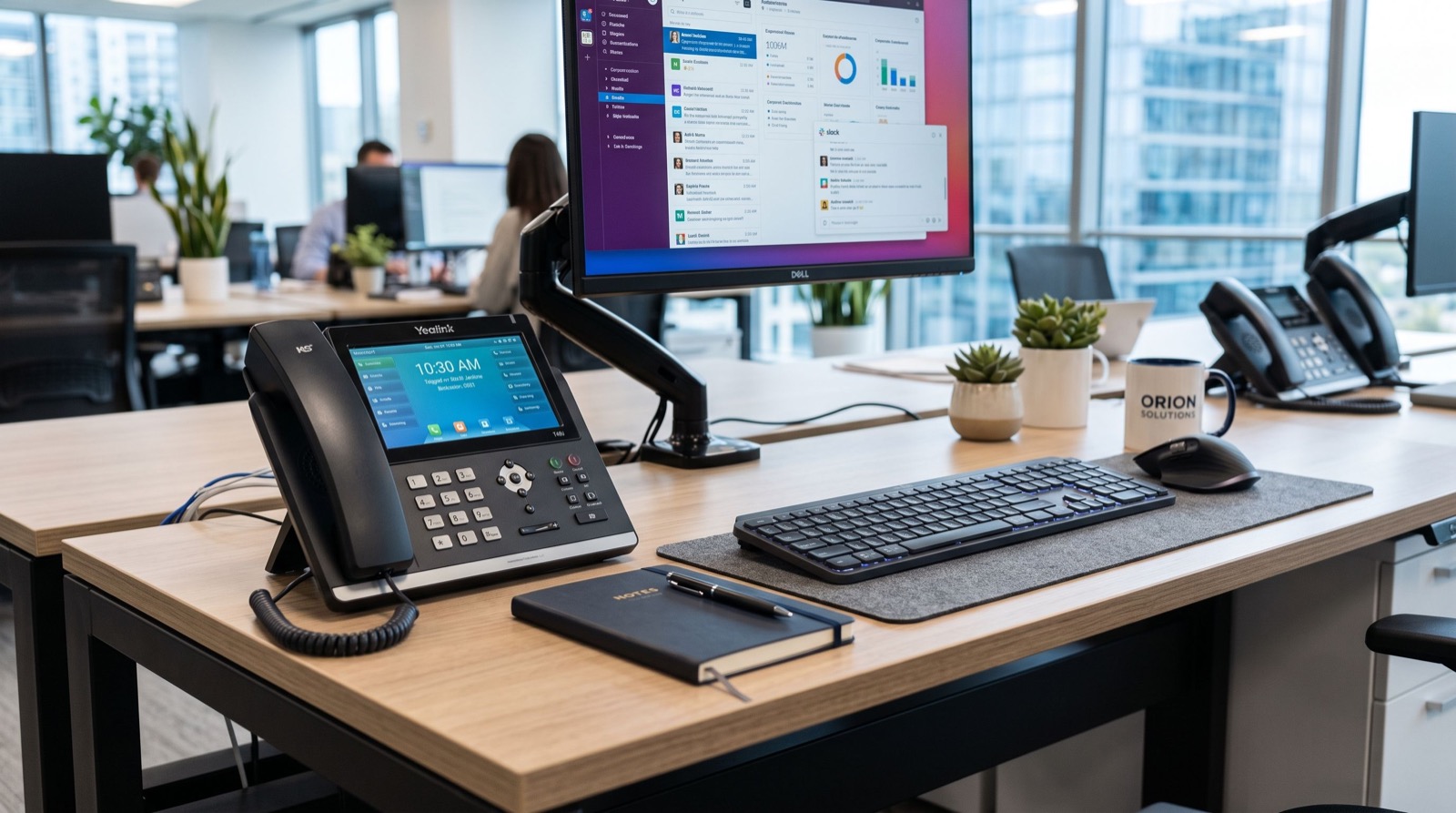
Modern IP Phone / IP Phones have quietly become the default choice for businesses that want clearer calls, lower bills, and smarter features. If you are still running analog lines in 2026, you are paying more for less. This guide explains what IP phones do, why they win, and how to pick the right model.
Whether you manage a small startup, a busy clinic, or a multi-site company, understanding the technology helps you buy wisely and avoid costly mistakes. Let us start with the fundamentals.
What Are IP Phones and How Do They Work?
An IP phone is a telephone that makes calls over the internet instead of traditional copper lines. It converts your voice into digital packets and transmits them using Voice over IP (VoIP) technology.
The result looks and feels like a normal desk phone, but it plugs into your network rather than a phone jack. That single change unlocks a huge range of software-driven features.
As explained in the widely referenced Voice over IP overview, VoIP has matured into the global standard for business voice, powering everything from small offices to massive contact centres.
The building blocks
- The handset — the physical or software phone your staff use.
- SIP protocol — the signalling language that sets up and ends calls.
- PBX or cloud platform — routes calls and manages features.
- Internet connection — carries the voice data to and from callers.
Top Benefits of Switching to IP Phones
The move from analog to IP is not just a tech upgrade — it changes the economics of communication. Here are the gains businesses notice first.
- Lower costs — free internal calls and cheaper long-distance rates.
- Scalability — add extensions through software, not site visits.
- Rich features — voicemail-to-email, IVR menus, call recording, and analytics.
- Mobility — take office calls anywhere via mobile and desktop apps.
- HD voice — wideband audio makes every conversation clearer.
These advantages compound over time. A growing business especially benefits, because scaling up costs a fraction of expanding an old landline system.
Which IP Phone Features Matter Most?
Feature lists can be overwhelming, so focus on what genuinely improves daily work. The specs below separate a great IP phone from a mediocre one.
| Feature | Why it matters |
|---|---|
| HD codecs (Opus, G.722) | Delivers crisp, natural-sounding wideband audio |
| Gigabit Ethernet | Prevents slowdowns when sharing a cable with a PC |
| Multiple SIP accounts | Handles more simultaneous calls per desk |
| Programmable keys | Speeds up transfers, speed-dial, and presence monitoring |
| Auto-provisioning | Makes large rollouts fast and consistent |
| PoE support | Powers the phone over the same network cable |
For demanding roles, a flagship model like the Fanvil X210 combines a large colour display, expansion keys, and Gigabit ports — perfect for receptionists and power users who juggle constant call traffic.
How to Choose the Right IP Phone for Your Business
The best phone is the one that fits your workflow. Follow a structured approach rather than buying on price alone.
A step-by-step selection guide
- Map each role and its typical call volume.
- Decide who needs a desk phone, a cordless unit, or a softphone.
- Match features — line keys, display, headset support — to each group.
- Confirm PBX and provider compatibility before you buy.
- Plan bandwidth and QoS so call quality stays high.
When in doubt, work with reliable local experts who can assess your network, recommend the right handsets, and handle provisioning so everything works on day one.
Setting Up for Great Call Quality
Even premium hardware needs a healthy network. A few basics prevent the vast majority of quality complaints.
- Enable QoS to prioritise voice over other traffic.
- Reserve about 100 kbps of bandwidth per concurrent call.
- Use PoE-capable switches for tidy, reliable power.
- Put voice traffic on its own VLAN for stability and security.
- Keep firmware updated to fix bugs and close security gaps.
Add a UPS and a backup internet connection so outages never leave your customers unable to reach you.
Common Mistakes to Avoid When Buying IP Phones
Plenty of businesses rush the switch and regret it. Sidestepping a few well-known traps keeps your rollout smooth and your calls crisp.
Most problems trace back to buying on price alone or ignoring the network. Both are avoidable with a little planning.
Pitfalls that trip up first-time buyers
- Underestimating bandwidth — a saturated link causes choppy, dropped calls.
- Skipping QoS — without traffic prioritisation, downloads can starve your voice quality.
- Ignoring PBX compatibility — some cheap handsets do not play nicely with every platform.
- Buying too few line keys — busy desks quickly outgrow a bare-bones model.
- Forgetting backup power — no UPS means no calls during an outage.
Another overlooked factor is future growth. Choose a system and supplier that let you add extensions painlessly, so a successful year does not force an expensive rip-and-replace.
Finally, do not treat security as an afterthought. Use strong SIP credentials, keep firmware patched, and isolate voice traffic on its own VLAN to protect both privacy and uptime.
Frequently Asked Questions
What is the difference between an IP phone and a regular phone?
A regular phone uses copper landlines, while an IP phone makes calls over the internet using VoIP. That shift enables lower costs, software features, and the flexibility to work from anywhere.
Do I need special internet for IP phones?
No special line is required — a stable broadband connection works well. Plan for roughly 100 kbps per concurrent call and enable QoS on your router for the best quality.
Can IP phones integrate with my business software?
Yes. Many systems connect to CRM tools, helpdesks, and Microsoft or Google platforms, enabling click-to-dial, screen pops, and call logging that boost productivity.
Are IP phones cheaper than landlines?
Almost always. Internal calls become free, long-distance rates drop, and scaling costs far less. Most businesses recover the hardware investment within a few months.
Conclusion: Make the Smart Move in 2026
Choosing modern IP Phones is one of the easiest ways to cut costs and upgrade how your business communicates in 2026. With clearer audio, powerful features, and effortless scalability, the technology pays for itself quickly while giving your team the tools to serve customers better.
Ready to upgrade? Review your roles, use the checklist above, and talk to a trusted supplier who can plan, provision, and support your new system end to end. Take the first step toward smarter calling today.