How a Queue Management System Cuts Wait Times 2026
Long lines cost money, patience, and reputation. A well-designed queue management system fixes all three by turning a messy physical line into a measured digital flow. In 2026, service organisations across the Gulf are using these platforms to shrink wait times, balance staff, and capture the data that drives smarter decisions. This article breaks down exactly how the technology reduces waiting, and how pairing it with fast scanning hardware pushes efficiency even further.
We will focus on the operational mechanics: throughput, routing, and the small integrations that quietly remove minutes from every transaction.
Why Wait Times Are Really an Operations Problem
Waiting feels like a customer issue, but it is really an operations issue. When counters sit idle while another line overflows, you have a routing failure, not a staffing shortage. A queue management system exposes that imbalance in real time and corrects it automatically by sending the next customer to the least-busy qualified agent.
According to service-design research summarised by the McKinsey Operations practice, small routing and process changes often deliver larger gains than simply hiring more staff. The lesson is clear: optimise flow first, then scale headcount.
The three levers that shorten queues
- Smart routing: match each customer to the right skill and counter.
- Load balancing: spread demand evenly across all open positions.
- Faster transactions: speed the service itself with scanning and pre-filled data.
How Does a Queue Management System Reduce Waiting?
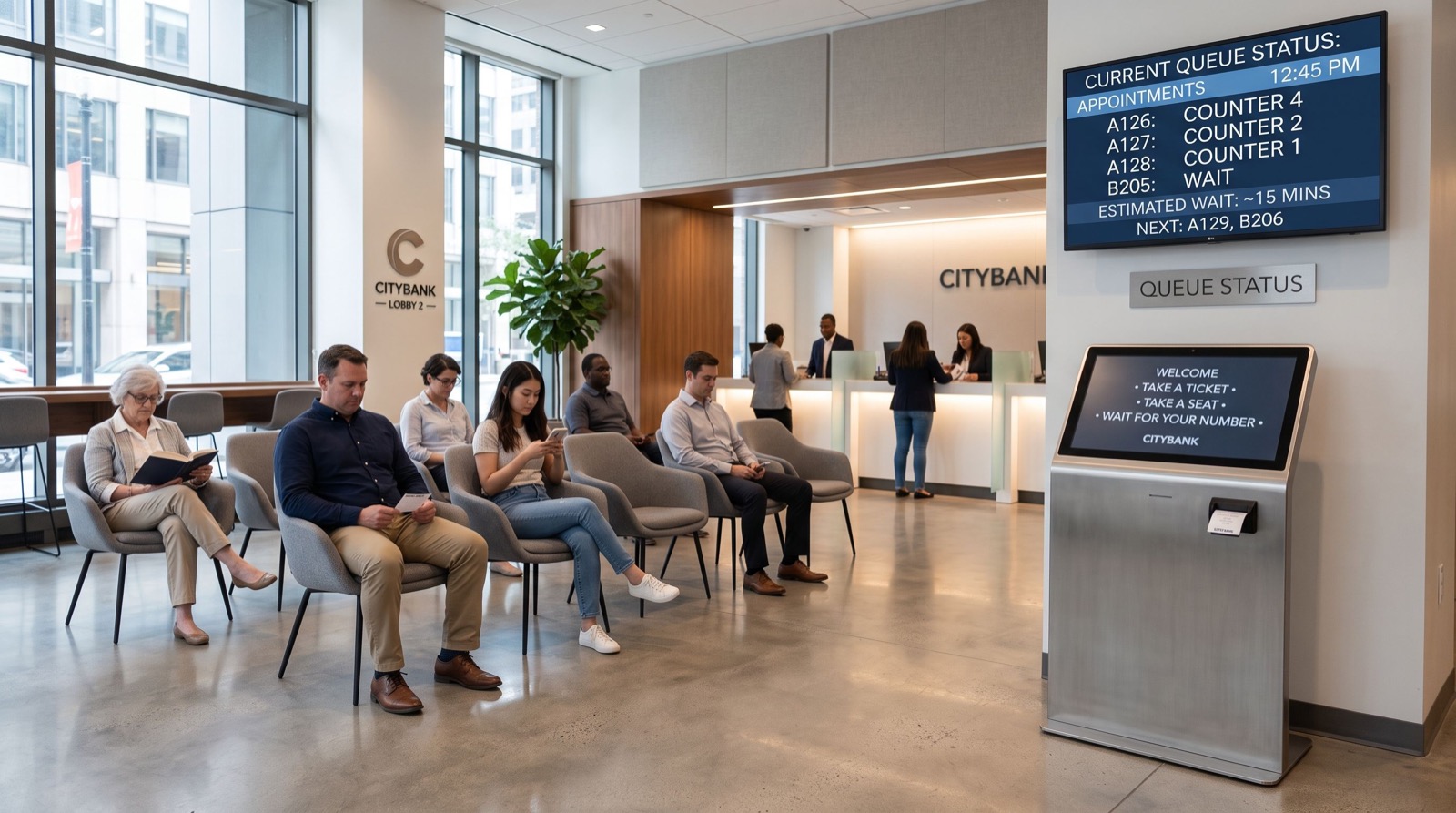
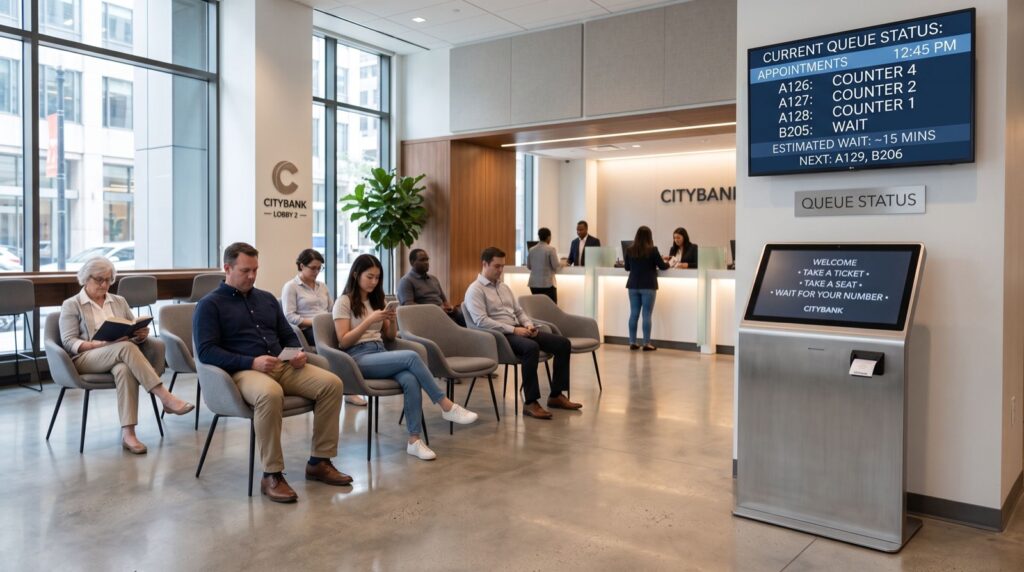
The reduction happens at several points in the journey. First, digital ticketing removes the confusion of who is next. Second, live displays and phone alerts let people wait without crowding a counter. Third, analytics reveal peak patterns so you can schedule staff before the rush, not during it.
Here is the measurable chain of improvements a modern platform delivers:
- Digital check-in replaces manual sign-in sheets and guesswork.
- Automatic routing eliminates idle counters and uneven lines.
- Service-time tracking flags slow steps for coaching or automation.
- Predictive staffing aligns agents to forecasted demand.
- Post-visit feedback closes the loop on quality.
For businesses that want expert setup and maintenance, partnering with a proven queue management system in saudi arabia provider shortens the path from purchase to measurable results.
Speeding the Transaction with Barcode Scanning
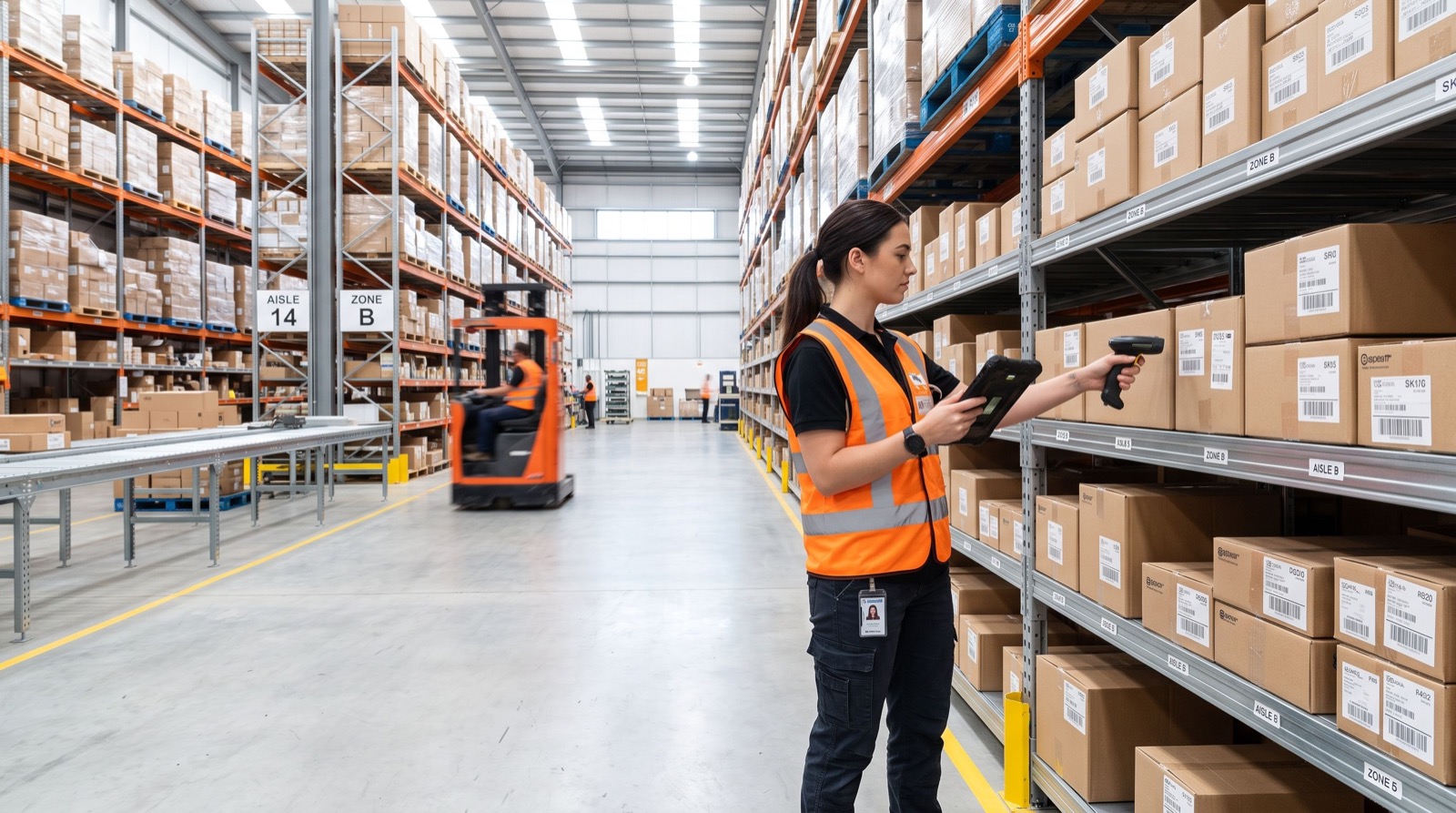
A queue only clears as fast as each transaction completes. That is where high-speed data capture matters. A dependable area-imaging scanner such as the Honeywell Vuquest 3320g lets agents scan IDs, invoices, tickets, and product codes instantly, removing manual typing and its errors.
Honeywell’s own product engineering documentation highlights fast omnidirectional reading and reliable capture of both printed and on-screen codes, which is ideal for counters that process mobile tickets. When each scan saves ten to fifteen seconds, a busy branch saves hours across a single day.
Where scanning plus queuing shine together
- Telecom stores: scan ID barcodes for instant SIM registration.
- Retail service desks: pull orders by scanning a confirmation code.
- Clinics: read appointment QR codes to open the right record.
- Logistics counters: capture parcel labels without retyping.
Comparing Manual Queues vs Smart Systems
The difference between a manual line and an integrated system is stark once you measure it. The table below shows typical outcomes we see after deployment.
| Metric | Manual Line | Digital Queue | Queue + Scanning |
|---|---|---|---|
| Average wait | High, unpredictable | Lower, visible | Lowest, stable |
| Counter idle time | Frequent | Reduced | Minimal |
| Data entry errors | Common | Some | Rare |
| Customer walkaways | High | Low | Very low |
| Manager visibility | None | Dashboards | Full analytics |
Practical Steps to Cut Wait Times This Year
Reducing waits is a project, not a purchase. Start by measuring your current baseline for one full week so you know your real peaks. Then redesign routing before adding hardware, because a smart rule change is free and immediate.
Next, equip counters with fast scanners to compress each transaction, and train staff to trust automatic routing instead of manual calling. Choosing reliable local experts for installation and support keeps the system tuned as your volumes grow.
Field tip: we have found that placing the ticketing kiosk near the entrance, not the counters, changes behaviour instantly. People check in, then relax, which spreads foot traffic and prevents the door-crowding that makes a lobby feel slower than it is.
Measuring the Real Return on a Queue System
Building a business case is easier than many managers expect, because the savings are concrete. Start by counting how many customers walk away during peak hours today; each abandonment is lost revenue that a shorter, visible line recovers. Then estimate the staff hours wasted on manual calling, dispute handling, and re-keying data, all of which shrink once routing and scanning are automated.
The second half of the return comes from consistency. A manual line produces wildly different experiences depending on who is working and how busy the room feels. A digital system delivers the same fair flow every day, which stabilises satisfaction scores and reduces the complaints that quietly erode a brand. Over a quarter, that consistency often matters more than any single speed gain.
Do not overlook the analytics dividend either. When you can prove that Thursday afternoons need two extra agents, you schedule precisely instead of overstaffing every shift. Precise staffing is usually the largest hidden saving, and it compounds across every branch you operate. In our deployments, the combination of recovered walkaways and smarter rostering typically pays back the investment well within the first year.
Frequently Asked Questions
How much can a queue management system reduce wait times?
Results vary by site, but organisations commonly see double-digit percentage reductions in perceived and actual waiting after combining smart routing with faster transactions. The biggest gains come from eliminating idle counters and speeding data entry with scanning.
Do I need special hardware to start?
A basic digital queue can run on a kiosk and displays alone. To maximise throughput, add barcode scanners at counters so agents capture data instantly. You can phase hardware in as budgets allow without replacing the core platform.
Will staff resist an automated queue?
Adoption is smooth when staff see that automatic routing removes the stress of manual calling and disputes over who is next. Short training plus a week of parallel running usually converts skeptics into advocates.
Can the system handle both appointments and walk-ins?
Yes. Modern platforms merge booked appointments and walk-in tickets into one fair line, honouring reservations while still serving unscheduled visitors efficiently.
Conclusion
Shorter lines are within reach for any service business in 2026. A queue management system attacks waiting at its root by fixing routing, balancing load, and speeding each transaction, especially when paired with reliable scanning hardware. Measure your baseline, redesign your flow, equip your counters, and lean on experienced local support. Do that, and you will turn frustrating waits into fast, professional service that customers remember for the right reasons.